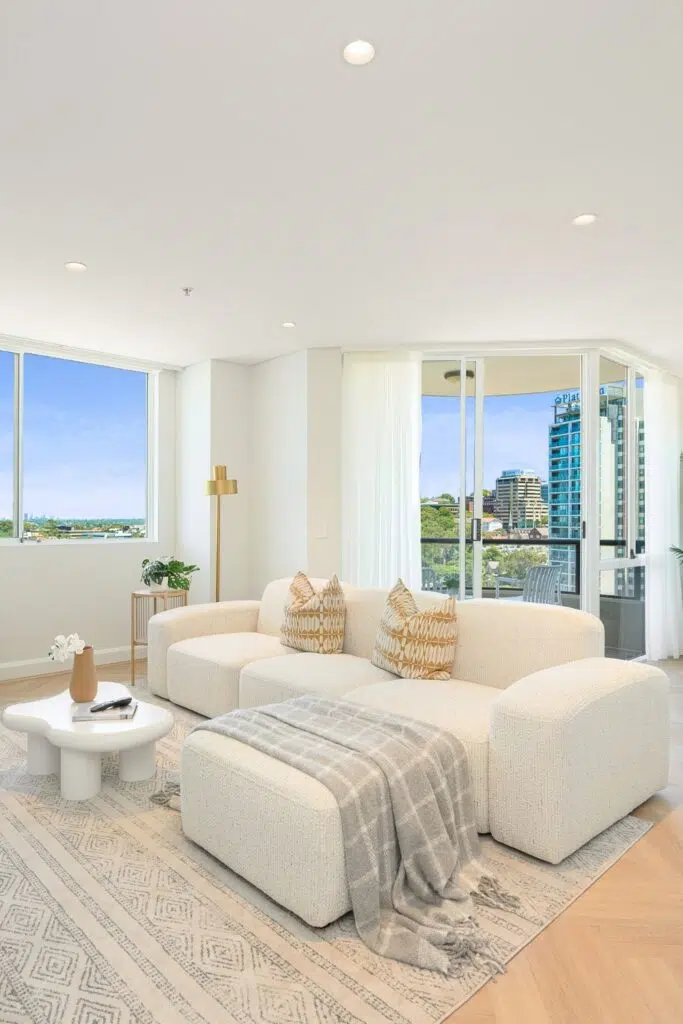

Short answer: For most Australian homes, dining tables sit around 730–760 mm high. Aim for dining chairs with a seat height near 430–480 mm to keep 250–300 mm of lap clearance. Allow roughly 500–600 mm width per person and check that chair arms (if any) fit under the table. Always do a five‑minute sit test.
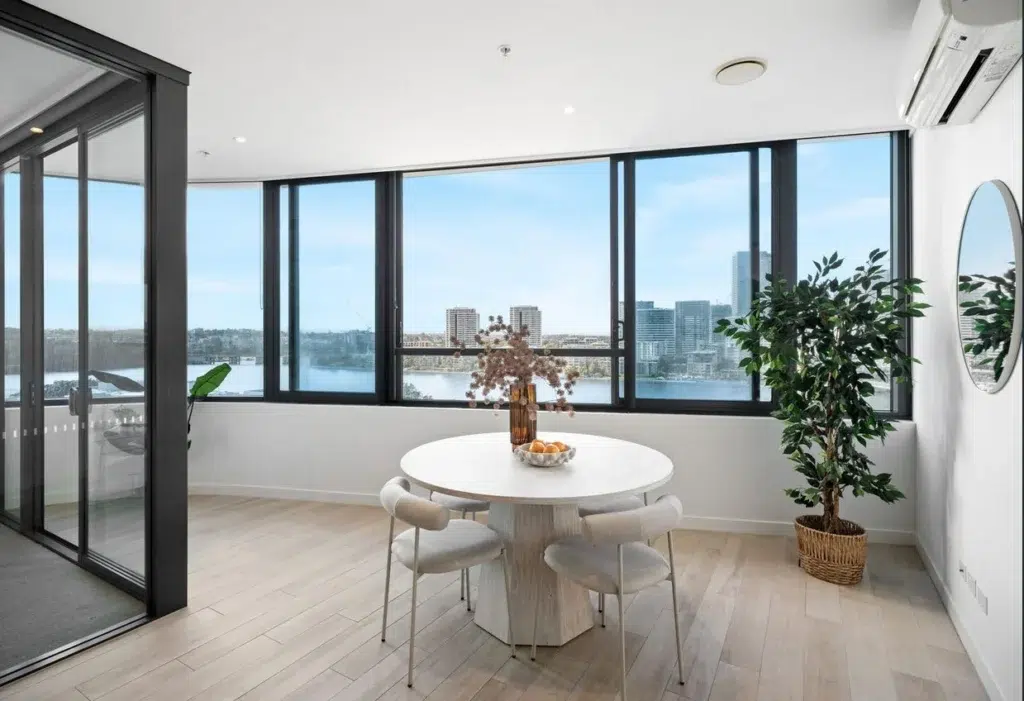
Dining chairs size guide Australia: how do I match seat height to common table heights?
Start with the table, then choose the chair. In Australia, most dining tables are built in the 730–760 mm range. A comfortable posture usually comes from maintaining a gap of about 250–300 mm between the top of the chair seat and the table underside (not just the tabletop). That typically means seat heights around 430–480 mm for most adults.
- If your table is on the lower side (about 730 mm): consider seats near 430–450 mm.
- If your table is around 740–750 mm: many people are comfortable near 450–470 mm.
- If your table is taller (around 760 mm): seats near 470–480 mm can help shorter diners avoid reaching up.
Guidance, not rules: body proportions vary. The right pair is the one that lets diners keep feet flat, thighs supported, shoulders relaxed, and forearms able to rest lightly on the tabletop without shrugging.
How much clearance do I need under the table and around the edges?
Comfort depends as much on free space as on height. Work through these checks before you buy:
- Under‑table clearance: measure from the floor to the lowest obstruction under the table (often an apron or support rail). Subtract your chair’s seat height. You want about 250–300 mm left for lap movement and to cross legs comfortably.
- Arm clearance: for chairs with arms, compare the arm height to the table’s underside. Arms should slide under without forcing diners to sit too far back.
- Edge comfort: a softened or chamfered table edge feels better on forearms than a sharp square. If the edge is thick or has a deep apron, lean towards a slightly lower seat to preserve clearance.
- Walkway space: leave about 900 mm behind pulled‑out chairs for easy passage in busy Australian kitchens and open‑plan spaces. In tight rooms, 750 mm can work if traffic is light.
Should I choose dining chairs with arms or without?
Think about who sits where, how long meals last, and how easily chairs need to tuck in.
- With arms: great for end chairs, longer dinners and added support. They often take more width (plan at least 600 mm per place), and the arms must clear the table’s underside to tuck in neatly.
- Armless: easier to fit more seats (about 500–550 mm per place), lighter to move, and simpler around table legs in small apartments.
- Mixed set: place armchairs at the table ends and armless on the sides to balance support and capacity.
If you prefer the embracing feel of an arm, but space is tight, look for sleeker, low‑profile arms and confirm the arm height during your sit test.
How do I seat a household with different heights and needs?
One table rarely fits every body the same way. Use a few simple tactics:
- Seat height spread: if you’re open to a collected look, combine two chair models with slightly different seat heights (within ~20 mm) to cover a broader range of statures.
- Seat depth: shorter diners often prefer shallower seats (around 400–430 mm) so calves don’t press the front edge; taller diners appreciate a little extra depth (around 430–460 mm) with lumbar support.
- Backrests: a medium‑high, gently curved back suits mixed households better than a very low or rigidly upright back. Look for a back that meets the body just above the belt line for support.
- Children: use a booster cushion with a non‑slip base rather than choosing very low seats for everyone.
- Older guests: stable bases, supportive arms, and grippy upholstery help with standing up.
Remember that textiles and timber feel different over a long meal. Upholstered seats can soften the feel without changing height, while timber or polypropylene may be easier to wipe down in family settings.
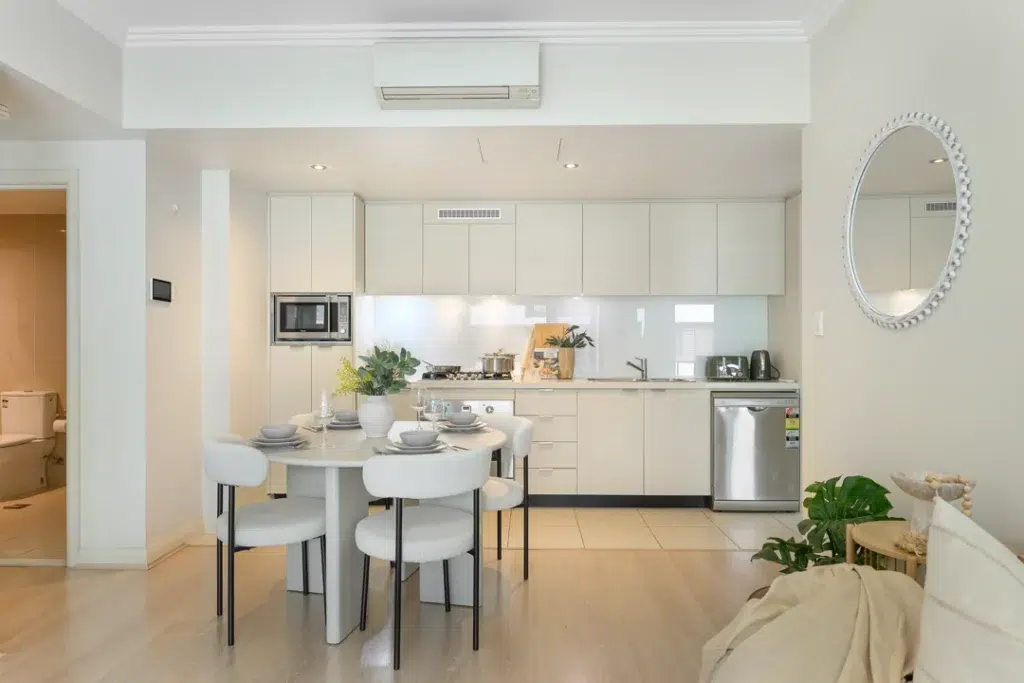
How many chairs fit my table without elbow wars?
Instead of forcing a number, plan by place width and leg layout:
- Place width: allow about 500–600 mm per diner for comfortable shoulders and cutlery space.
- Table legs vs pedestal: corner legs limit how far chairs can slide in at the corners; pedestals and trestles give you more flexibility along the sides.
- Round tables: smaller rounds (e.g., near 1000–1100 mm diameter) seat four; larger rounds add places in twos and benefit from a pedestal base to avoid knee clashes.
- Benches: handy for squeezing in kids, but confirm the bench height against the table’s underside the same way you would for a chair.
When in doubt, mock it up: tape outlines on the floor and move chairs you already own to test circulation in your actual room.
What should be on my five‑minute in‑store sit‑test checklist?
Bring a tape measure and work through this quick routine with any chair you’re considering:
- Feet flat: can you plant your feet without toes straining or heels floating?
- Thigh support: is there two to three fingers of space between the front edge of the seat and the back of your knees?
- Lap clearance: slide the chair to the table you plan to pair it with (or similar). Can you cross ankles or shift without hitting the apron?
- Back contact: does the chair meet your lower back naturally when you sit upright?
- Shoulders and elbows: are your shoulders relaxed with forearms resting lightly on the tabletop?
- Stability: rock gently; the chair should feel planted with no twist.
- Arms (if fitted): confirm they glide under the table without wedging.
Where can I browse pieces that suit this guide?
If you’re comparing options, explore our Australian ranges and filter by the measurements supplied by each maker, then verify them in person where possible:
- Explore dining chairs for a variety of seat heights, back shapes and materials.
- See dining tables to confirm under‑table clearance and leg layouts.
- Planning an alfresco setting? Browse outdoor furniture and apply the same clearance principles, noting that outdoor cushions may compress differently.
FAQs
What if my table has a thick apron or under‑frame?
Measure to the lowest point under the table, not the tabletop. Prioritise lap clearance (about 250–300 mm) even if that means choosing a slightly lower‑seated chair or an armless model that can tuck closer.
Can I use living armchairs as dining chairs?
Some compact armchairs work at a dining table, but check three things: seat height (many lounge chairs sit too low), arm height (must clear the table underside), and width (plan at least 600 mm per place). Always do the in‑store sit test with a table of similar height.
Does this advice change for outdoor dining?
The same height and clearance principles apply. Just account for cushion compression, sloped terraces and outdoor rug thickness. If chairs are on soft decking or grass, re‑check stability and perceived seat height in situ.
Editorial note: This guide offers general sizing advice for Australian homes. Always confirm current product measurements, materials and finishes with the retailer or maker before purchasing, and test the chair and table together where possible.