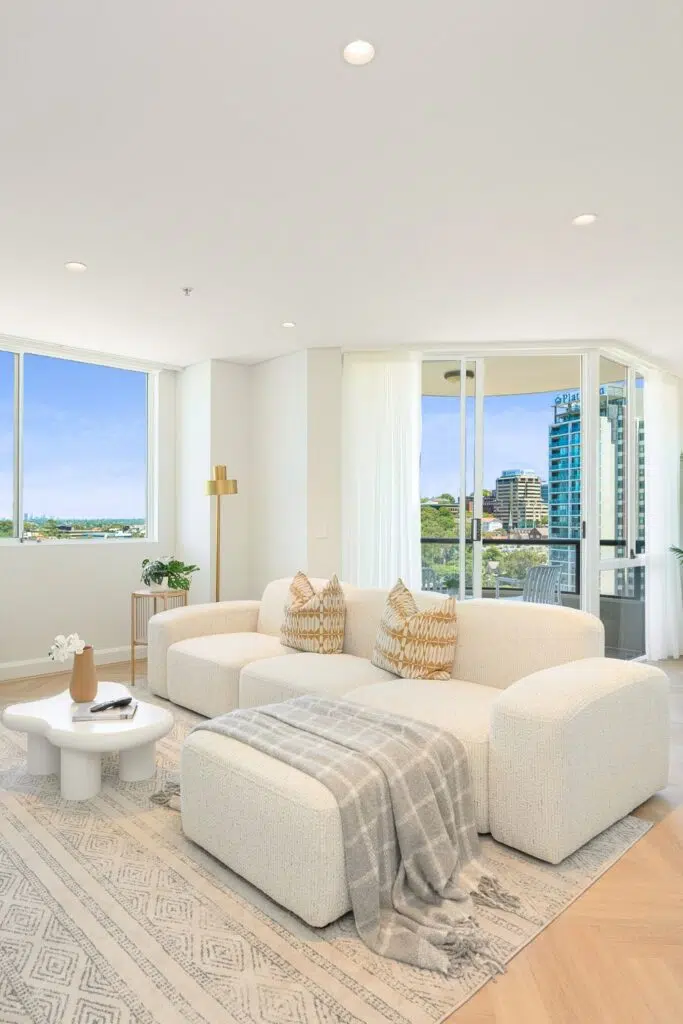

A good armchair fits the room first and the person second: measure the space, allowing about 60 to 90 cm of walkway around it, then choose a seat height and depth that suit the people who will use it most. After that, pick a fabric for how the room is lived in and a shape that balances your sofa, and the armchair will look like it was always meant to be there.
Key takeaways
- Measure the floor space and doorways before you look at styles.
- Seat depth and back height decide comfort more than how plush a chair looks.
- Choose the fabric for real life: tight weaves for families, boucle and chenille for softness, lighter colours away from strong sun.
- Swivel and barrel armchairs suit open-plan rooms; tailored, upright armchairs suit reading corners.
- Style an armchair with a side table, a lamp and one cushion or throw, and angle it towards the conversation.

What size armchair do I need for my room?
Start with the footprint. Mark the chair’s width and depth on the floor with masking tape and walk around it: you want roughly 60 to 90 cm of clear path where people move, and about 40 to 45 cm between the armchair and a coffee table so a cup is within reach without knocking knees.
In apartments and rentals, also measure doorways, lift and stair turns before you order. A compact armchair with slim arms gives you a full seat without the bulk, while a deep, wide armchair needs a room that can carry it visually as well as physically.
- Small living room or apartment: a compact armchair with narrow arms and raised legs, which keeps the floor visible and the room feeling larger.
- Medium living room: one generous armchair opposite the sofa, or two smaller ones as a pair.
- Large or open-plan room: a pair of armchairs or a swivel armchair to anchor a second zone, such as a reading nook.
How do I know if an armchair will be comfortable?
Comfort comes down to three measurements. Seat height is usually around 42 to 48 cm; lower feels more relaxed, higher is easier to get out of. Seat depth of around 50 to 55 cm suits upright sitting and most people, while deeper seats suit tucking your legs up but leave shorter people perched forward.
Back height matters too. A low back looks light and modern but supports only the lower back, while a higher back lets you rest your shoulders and head, which is what you want in a reading chair. Arm height should let your elbows rest without hunching your shoulders.
- Decide who will use the armchair most and how: reading, watching TV, or occasional guest seating.
- Compare the seat height with your sofa so sight lines across the room feel even.
- Check the seat depth against the user’s height; add a lumbar cushion if a chair you love runs deep.
- Look for a back high enough for the way you sit: shoulder support for reading, lower for conversation.

Which armchair fabric is best for everyday living?
Pick the fabric for how the room is used, then the colour. Tight weaves and textured fleck fabrics hide everyday wear and are a safe choice for families, while boucle, chenille and sherpa bring softness and texture that suit a calmer living room or bedroom corner.
Australian light is strong, so keep pale and richly coloured fabrics out of direct afternoon sun to slow fading. Vacuum upholstery regularly and blot spills straight away; our guide to cleaning a fabric sofa works just as well for an armchair.
| Fabric | Feel and look | Best for | Watch for |
|---|---|---|---|
| Tight weave or fleck fabric | Hard-wearing, understated | Families, everyday use | Check the colour hides marks in your light |
| Boucle | Soft, looped, textured | Relaxed modern rooms | Loops can catch on rough edges and pet claws |
| Chenille | Soft and velvety with depth of colour | Cosy living rooms | Brush gently with the pile when cleaning |
| Linen or linen-look | Light, natural, breathable | Coastal and warmer rooms | Creases and shows marks more easily |
| Sherpa | Plush and warm | Bedrooms and reading corners | Best away from food and heavy daily use |
Should I choose a swivel armchair or a fixed armchair?
A swivel armchair turns on its base, so you can face the TV, the kitchen or the conversation without moving the chair. That makes swivel chairs a natural fit for open-plan Australian homes; the Lumi swivel armchair in beige is a soft, neutral example that sits easily in a shared living and dining space.
A fixed armchair suits a defined spot, such as a reading corner beside a window or a pair facing the sofa. Allow a little more space around a swivel chair so it can turn without hitting a side table or wall.
- Swivel armchair: open-plan rooms, chairs that serve two zones, and anyone who likes to turn towards the action.
- Barrel armchair: a rounded, enveloping shape that softens a room of straight lines.
- Button back or wingback style: a more traditional, structured look with good back support.
- Accent armchair with exposed timber or metal legs: lighter in look and easy to clean around.

What should I check in an armchair’s frame and legs?
Look for a solid frame that does not rock or creak when you sit and shift your weight, and legs that sit flat on the floor. Raised legs make a chair look lighter and let you vacuum underneath, which helps in smaller rooms and homes with pets.
Leg finish shapes the style as much as the fabric. Black legs read modern and graphic, natural timber feels warm and Scandinavian, and gold or brass adds a touch of glamour. When you compare chairs such as the Arco armchair in taupe and the Elio armchair in brown, look at the legs and base as closely as the fabric.
How do I style an armchair in my living room?
Place the armchair where it joins the conversation: angled slightly towards the sofa, with its front legs on the rug so the seating reads as one group. Pair it with a small side table for a cup and a lamp behind or beside it, and you have a reading corner that works day and night.
Let the armchair either match or contrast, not half of each. A pale chair such as the Moona armchair in white sits quietly beside a neutral sofa, while a coloured chair like the Felix accent chair in green becomes the room’s feature. For more layouts, see how to style accent chairs in your living room.
- Add one cushion and a throw rather than a pile, so the seat stays usable.
- Repeat the chair’s colour once elsewhere in the room, in a cushion, artwork or vase.
- Use a pair of matching armchairs opposite the sofa for a balanced, formal layout.
- In a bedroom, an armchair with a floor lamp turns an empty corner into a reading spot.
Quick FAQ
An armchair is any single upholstered chair with arms, made for comfortable sitting. An accent chair is chosen mainly to add colour, shape or texture to a room and may or may not have arms. Many armchairs do both jobs, which is why the terms are often used together.
Allow about 60 to 90 cm of clear walkway where people move past the chair. Keep roughly 40 to 45 cm between the armchair and a coffee table so drinks are within easy reach. A swivel armchair needs a little extra room so it can turn freely.
Most armchairs have a seat height of around 42 to 48 cm. Lower seats feel more relaxed and lounge-like, while higher seats are easier to get in and out of, which suits older family members. Matching the height of your sofa keeps the room looking even.
Boucle is soft, textured and forgiving of light wear, and it suits relaxed modern rooms. Its loops can catch on sharp edges, jewellery and pet claws, so it is best where those are less of a risk. Vacuum it gently and spot clean spills promptly.
It does not have to. A matching armchair gives a calm, cohesive look, while a contrasting colour or texture adds interest and makes the chair a feature. Either way, linking the two through one shared tone in cushions or the rug keeps the room feeling planned.
Choose your armchair by measuring the space, checking the seat for the people who will use it, and picking a fabric that suits how the room is lived in; the style then falls into place. Browse the EleLiving armchair range for swivel, barrel, boucle and statement colour chairs, and our armchair buying guide for more ideas.