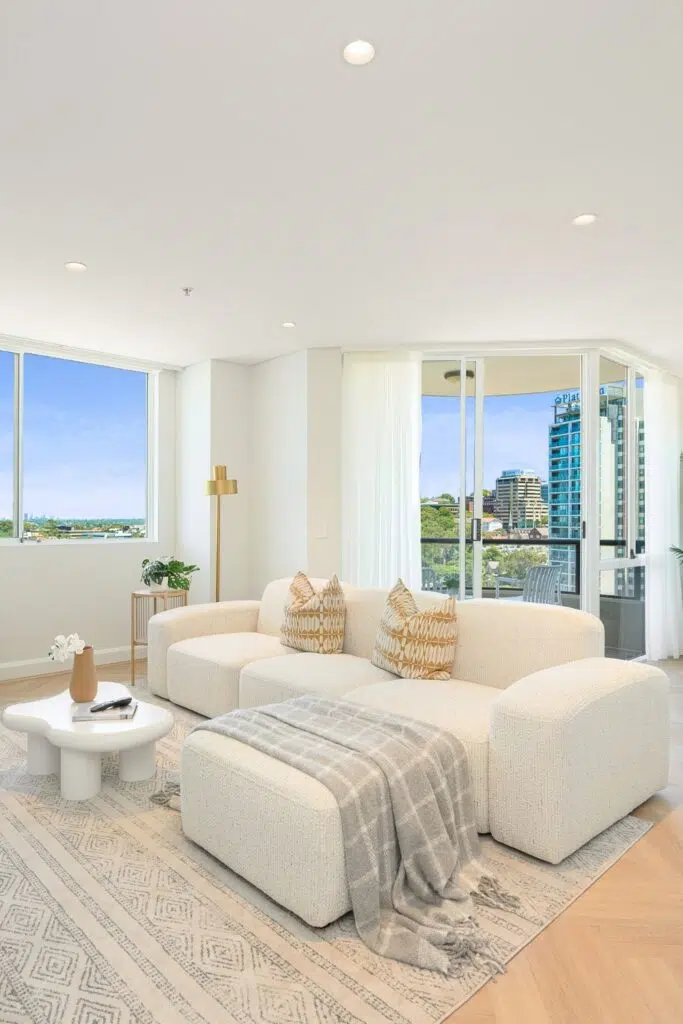

Here’s the short answer: for a comfortable dining set-up, aim for 250–300 mm between the top of the seat and the underside of the table, test one piece you love first, and then mix materials or colours in controlled ratios (like 70/30). Use end chairs to add character. That’s the dining chairs mix and match dining table formula in a nutshell.
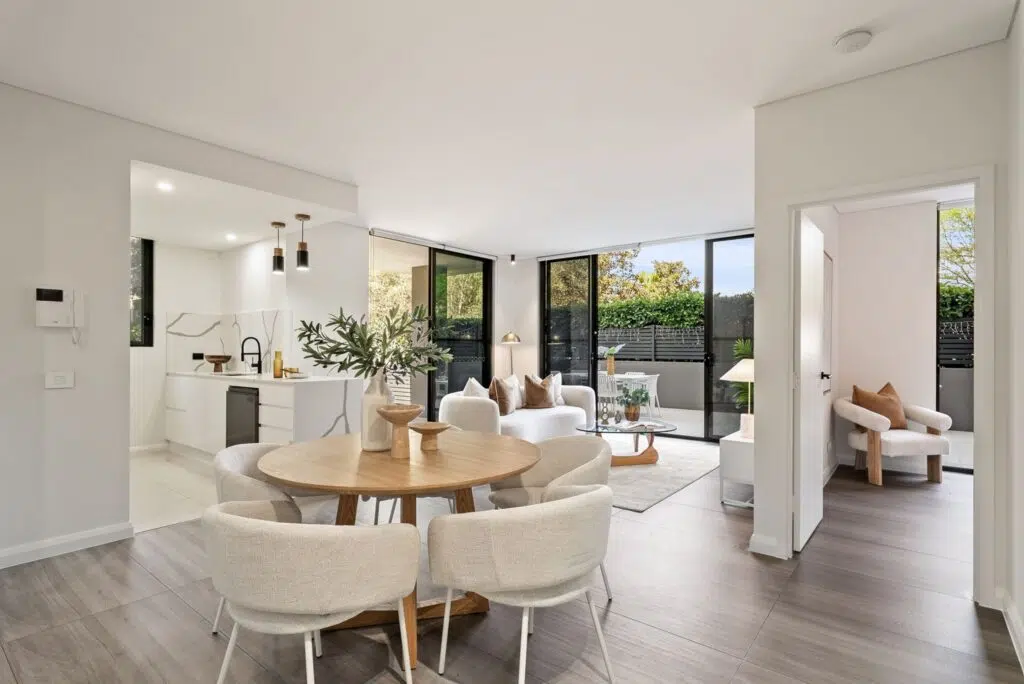
What seat and table heights actually work together without feeling awkward?
Comfort starts with clearance. A practical rule of thumb is a 250–300 mm gap between the top of the dining chair’s seat and the underside of the dining tabletop or apron. This range allows most adults to slide in easily, cross legs if needed, and keep elbows comfortable while eating. Counter and bar settings are different, but for standard Australian dining, this seat–table distance keeps things on track.
Before buying a full set, test sit if you can. If shopping online, compare stated seat heights and table clearances, and allow for seat cushions that may compress slightly. If you’re planning an upholstered end chair, remember that plush seats can sit a touch higher once unweighted. When in doubt, prioritise the chair you’ll use most often and check the numbers against your preferred table profile.
Tip for Australian homes with open-plan living: allow at least 900 mm circulation space around the table edge in main walkways so chairs pull out without clashing with kitchen islands or sliding doors.
How to nail dining chairs mix and match dining table decisions for real homes?
Mixing works best with a clear structure. Start with one anchor (either table or chairs), set a palette, then add contrast in a controlled ratio. Here are three easy pathways that avoid visual clutter while feeling personal.
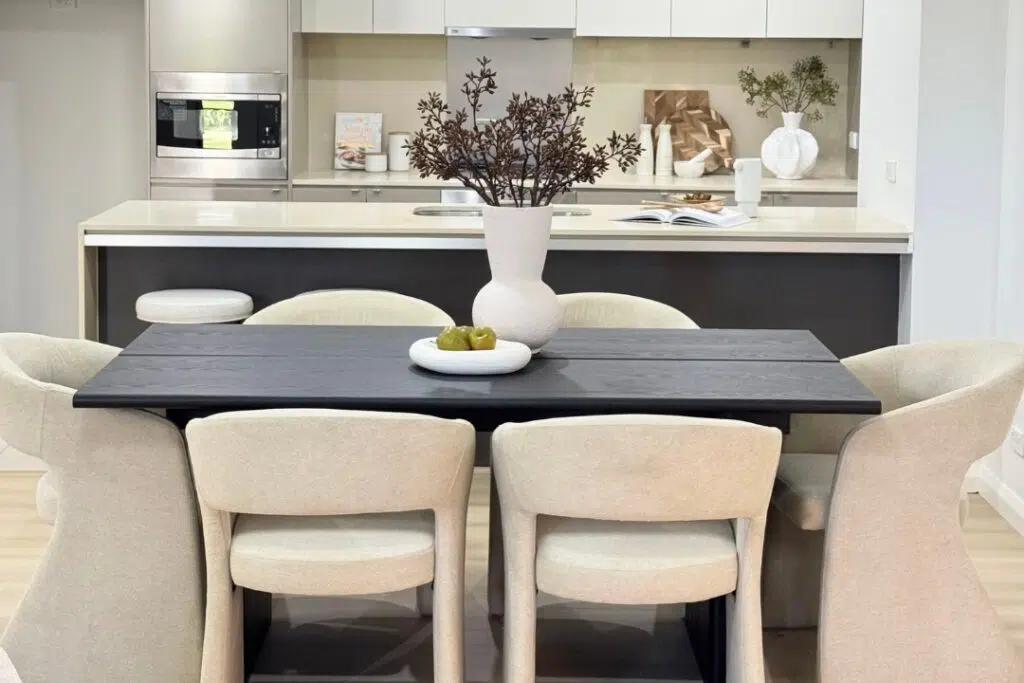
What are three easy, height-safe mix-and-match recipes I can copy today?
Use any of these as plug-and-play frameworks, adjusting to your space, light, and family needs.
1) Light timber table + tonal timber chairs (70/30 contrast)
• The look: breezy and coastal—great for Australian apartments or beach-adjacent homes.
• How to do it: choose a pale table timber such as ash, oak, or Australian species with a light finish. Add chairs in the same base tone, then introduce a 30% accent via two end chairs or a single contrasting stain (e.g., honey table with slightly greyer chairs). Keep metal details warm (brass) to maintain cohesion.
• Height check: confirm that the chair seat doesn’t creep too high if it has a curved timber shell. Many sculpted shells sit taller at the front edge; you still want 250–300 mm clearance under the table apron.
2) Dark table + mixed upholstered side chairs + statement end chairs
• The look: refined and comfortable for longer dinners. Works well in Melbourne or Sydney terrace homes with moodier palettes.
• How to do it: select a charcoal or walnut-toned table. Mix two related fabric colours on side chairs (for example, oatmeal and storm grey) in a 2:1 rhythm around the table. Finish with plush end chairs that are subtly larger or have arms for presence.
• Height check: arm clearance matters. If you use an armchair at the head, measure the arm height against the underside of the tabletop to ensure arms glide under without scraping. If arms are higher, keep end chairs slightly pulled back to avoid knocks.
3) Round pedestal table + airy metal or timber chairs
• The look: small-space-friendly and flexible for renters.
• How to do it: with a round table (especially a pedestal), choose four light-profile chairs in metal or slim timber with open backs. Introduce variety via finishes: matte black frames with natural seats, or vice versa. Consider adding two spare chairs that stack neatly for guests.
• Height check: pedestal bases can flare. Sit a sample chair to confirm knees clear the base when rotated 10–15 degrees—handy for compact Australian dining nooks.
Should I choose chairs first or the table first?
Both paths work—choose the one that reduces risk for your situation:
- Chair-first (great for comfort seekers): If ergonomics or specific upholstery is your priority, lock in the chair you love and test it against table options. This approach suits households that linger after meals or work from the dining room. Once the seat height is set, look for a table that preserves the 250–300 mm clearance and echoes at least one material or finish from the chair.
- Table-first (great for layout-led rooms): If your space is tight or you need a particular size (say, a 6–8 seater for regular family dinners), secure the table footprint first. Then shortlist chairs within a 40 mm seat-height band that maintains the clearance window. Use fabric or metal finishes to connect back to your kitchen hardware or nearby living pieces.
Whichever route you choose, bring one physical reference with you when browsing: a chair to test under tables, or a simple timber/paint/fabric swatch to compare against new chairs. Small samples prevent mismatches under Australian daylight, which can shift cool or warm depending on orientation.
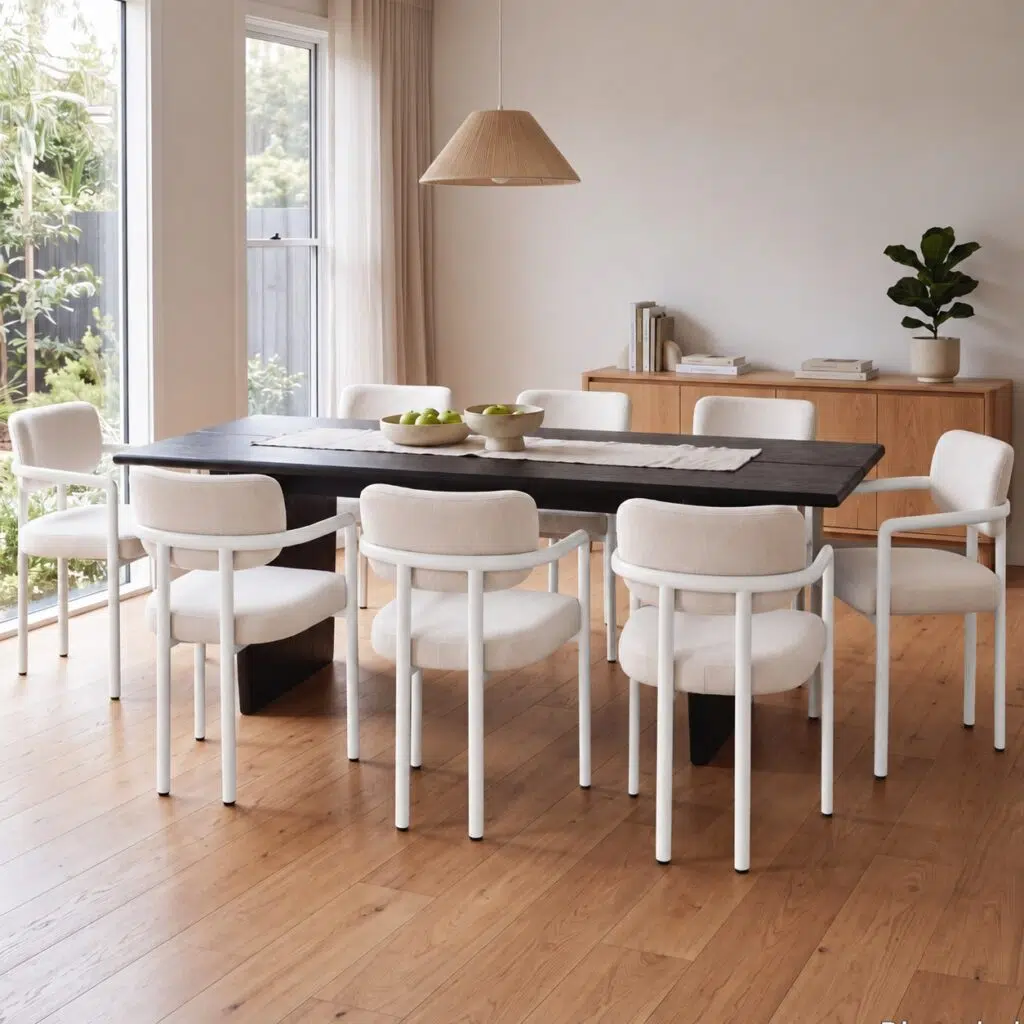
How do I use end chairs to create a focal point without overdoing it?
End chairs act like bookends—they frame the setting and can carry more character. Keep side chairs calm and repeatable, then let the end chairs step up in one or two ways only:
- Scale: a slightly taller back or a deeper seat lends presence at the head.
- Arms: comfortable for longer meals, but check arm height versus the table underside.
- Texture: consider a boucle, linen blend, or leather to contrast smooth timber.
In smaller Australian dining rooms, choose end chairs that can double in the living area when extra guests arrive. A compact occasional or armchair with a tidy footprint can transition between rooms, adding versatility.
Which materials and colours pair well in Australian light?
Australian interiors often balance strong natural light with tactile, grounded finishes. Try these pairings:
- Warm oak + soft greys: forgiving with coastal glare and easy to match with kitchen joinery.
- Walnut + eucalyptus green: a nod to native bush tones; calming in rooms with cooler southern light.
- Black metal + natural rattan: crisp lines with a relaxed texture; good in apartments where you want visual lightness.
Whatever you choose, repeat a finish at least twice (for example, chair legs and a nearby shelf) so the story feels intentional. If your dining zone sits inside a living area, echo one element from your sofa or coffee table for cohesion.
Where can I browse options and keep the mix consistent?
To build your shortlist, start with categories that make comparing easy:
- Explore side and end seat styles via dining chairs. Shortlist by seat height and material, then note two finish directions (primary and accent).
- Match footprints and leg profiles with dining tables. Look at corner leg vs pedestal bases depending on room flow.
- If your dining area spills outdoors in summer, consider weather-suitable looks in outdoor furniture for visual continuity, then keep indoor pieces for everyday use.
As you bookmark options, label them by “Seat height”, “Arm height”, “Overall width”, and “Finish”. This keeps the mix intentional rather than accidental.
Quick FAQ
What’s the safest seat height for standard tables?
Most people find a seat height that sits 250–300 mm below the table underside the most comfortable. If several users are shorter or taller than average, aim near the middle of that window and consider cushioned seats for flexibility.
Can I mix two chair styles around one table?
Yes—keep one element consistent (leg colour, timber tone, or upholstery family) and use a 70/30 ratio so one style clearly leads. Place the accent chairs as end chairs or pair them opposite each other for balance.
Do end chairs need arms?
No, but arms add presence and comfort. If you choose arms, measure their height against the table to avoid scraping when you slide in. If space is tight, armless end chairs often look lighter.
What’s a simple step-by-step to get this done this weekend?
- Decide chair-first or table-first based on comfort vs room layout.
- Measure your space and set a target table size. Leave ~900 mm for circulation in main walkways.
- Choose a palette: pick one dominant timber or metal finish and one accent.
- Shortlist 4–6 chairs that hit the seat-height window; flag any arm heights for end chairs.
- Test one piece in person if possible, or map dimensions with painter’s tape at home.
- Lock in your anchor item, then add your accent pieces following a 70/30 ratio.
Editorial note: This guide offers general design advice for Australian homes. Always check current product details—dimensions, finishes, care instructions, and any service conditions—directly on the product page or with the retailer before purchase, as these can change over time.