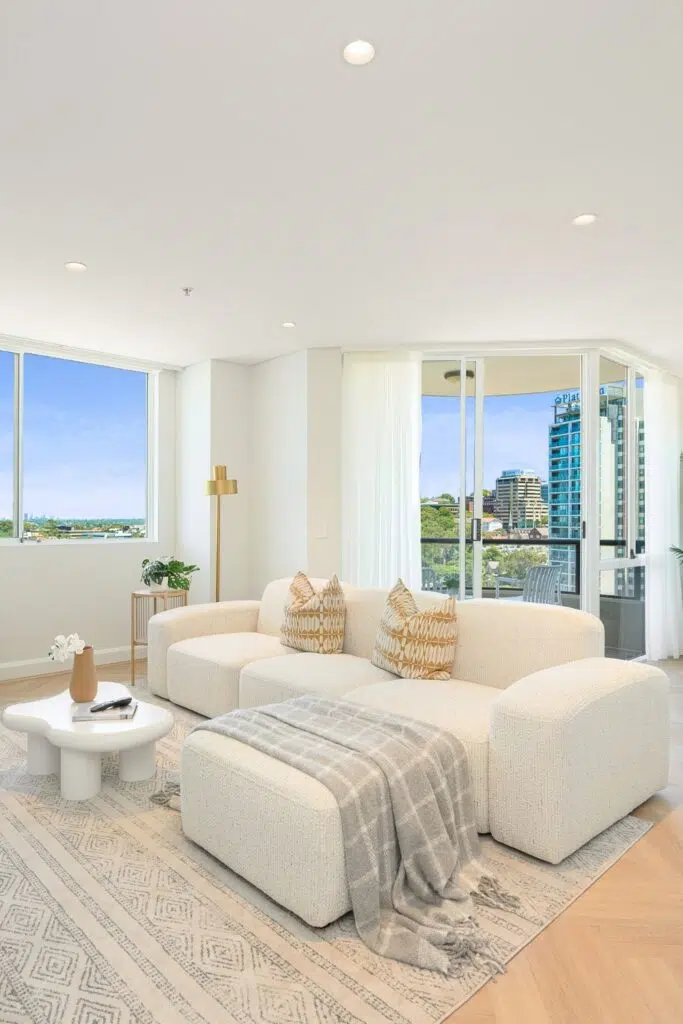

What Is Multifunctional Furniture, and Why Do Aussie Homes Need It Now?
Multifunctional furniture is any piece designed to perform two or more distinct roles — a dining table that expands for guests, a sideboard that moonlights as a TV unit, or an entertainment cabinet that hides a home office’s worth of clutter. For Australians living in Sydney, Melbourne, or Brisbane apartments where the median new-build size has shrunk significantly over the past decade, this category of furniture is no longer a novelty. It is a practical necessity.
Open-plan living rooms that must function as dining rooms, home offices, and guest rooms all at once demand pieces that earn their square metres. The good news is that thoughtful multifunctional furniture no longer means compromise on style. The following guide walks through the smartest dual-purpose buys for smaller Aussie homes, room by room.
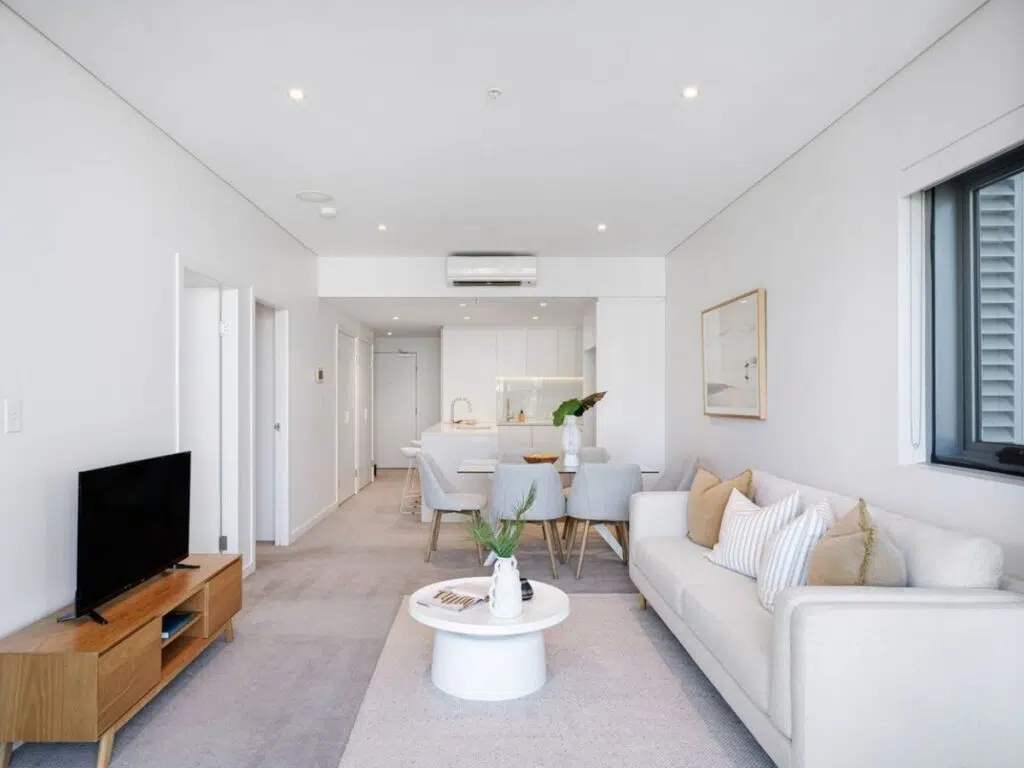
Key Takeaways
- Extendable dining tables let a compact dining zone seat 4 on weeknights and 8 for weekend entertaining without permanently occupying floor space.
- A sideboard or buffet placed in an open-plan living area earns its footprint by serving as dining storage, a TV console, a home-office credenza, or a hallway cabinet simultaneously.
- Entertainment units with built-in drawers and shelves eliminate the need for separate storage furniture, reducing the number of pieces in a small room.
- Round tables have no corners, so they occupy less visual and physical space in tight rooms and allow easier traffic flow in open-plan layouts.
- Choosing furniture with a raised or slender base creates a sense of visual lightness, making small rooms feel less cluttered even when storage needs are high.
The Dining Zone: One Table, Two Modes
The dining table is the single piece of furniture most likely to waste space in a smaller home. A fixed 2-metre table seats the whole family at Christmas, but it dominates the room for the other 364 days of the year. The solution is an extendable dining table — a piece that lives at its compact footprint during the week and expands for entertaining on weekends.
Ele Living’s dining tables collection includes extendable options in materials ranging from European knotty oak to heat-resistant ceramic and marble-effect surfaces. For apartments in particular, a round or oval table in its closed position is worth prioritising: the absence of corners means traffic can move around the table naturally, and the curved edges are safer in tight spaces where people are constantly passing.
A useful planning rule: allow at least 90 cm between the table edge and any wall or other furniture so chairs can be pulled back comfortably. Each seated person needs approximately 60 cm of table width. For a Sydney studio or a compact Melbourne terrace, an extendable table that measures around 160 cm closed and expands to 240 cm ticks every box — intimate for two on a Tuesday night, generous for eight on Saturday afternoon.
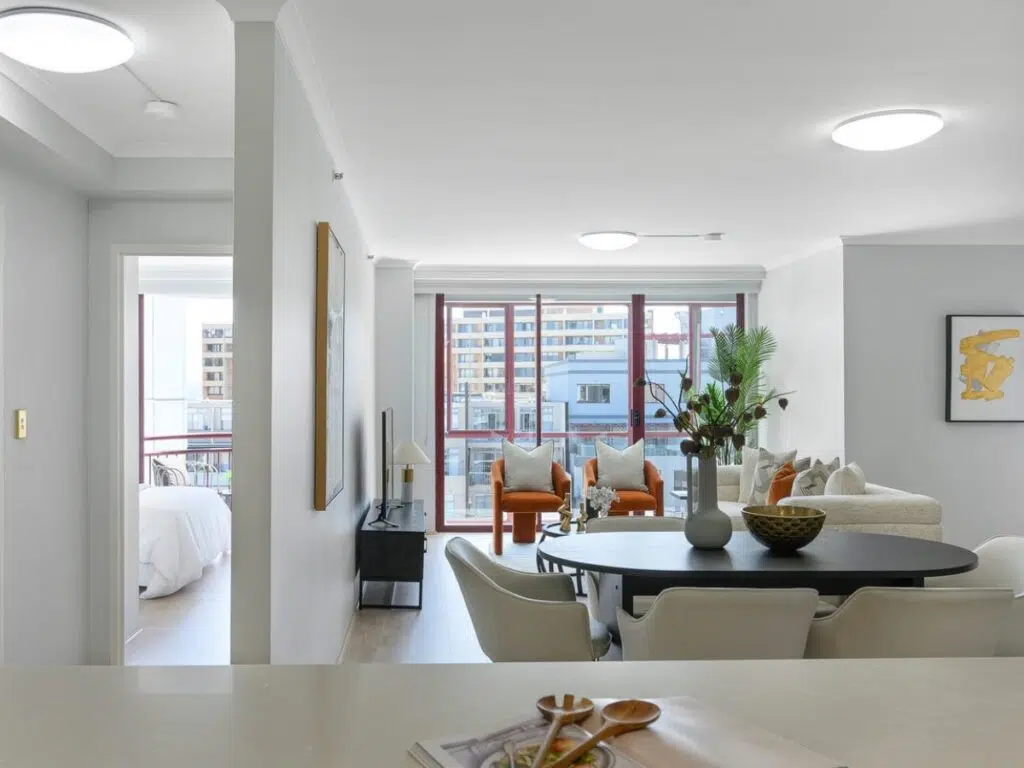
Standout Pick: The Ethan Extendable Dining Table
The Ethan Extendable Dining Table in European Oak is a strong example of this principle in practice. It measures 190 cm in its standard configuration and extends to 240 cm, comfortably transitioning from a 4–6 person everyday setup to an 8-person entertaining layout. The tabletop is solid European knotty oak — a timber that develops character over time and resists the warping that Australia’s humidity variations can cause — while powder-coated matte black steel legs add corrosion resistance suited to coastal homes. The extension mechanism requires no tools and takes seconds, which matters when guests arrive and you need to rearrange quickly.
The Living Room: Storage That Doesn’t Look Like Storage
In an open-plan home, the living zone is visible from almost every other part of the space. This means storage furniture needs to carry its visual weight — it should look deliberately chosen, not like a workaround. The two pieces that consistently deliver here are the entertainment unit and the sideboard.
Entertainment Units: Media Cabinet Meets Clutter Control
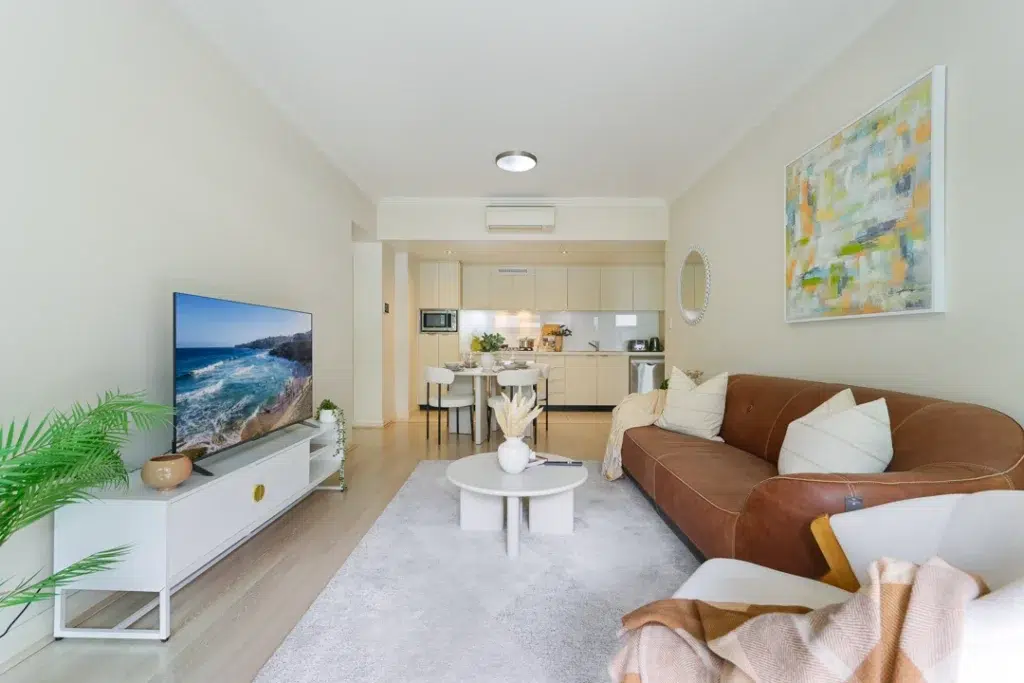
A well-designed entertainment unit does more than hold a television. It consolidates cables, media devices, remote controls, gaming equipment, and decorative objects into a single footprint that would otherwise be scattered across multiple surfaces. Ele Living’s entertainment units range includes TV stands with drawers, shelves, and cabinets designed specifically for smaller living rooms and apartments, without reducing storage capacity. Low-profile, wall-hugging designs are especially effective in open-plan spaces because they keep the sightlines clear while hiding a considerable amount of everyday mess.
When selecting an entertainment unit for a small room, look for built-in cable management — loose cords are a leading cause of a living room feeling chaotic — and models that are part of a coordinated furniture range, so a matching coffee table or sideboard can be added later without visual conflict.
Sideboards and Buffets: The Most Versatile Piece in Your Home
Few pieces of furniture work as hard across as many contexts as a well-chosen sideboard. In the dining zone it stores tableware, table linen, and serving equipment. Moved to the living room, it becomes a TV console or a display surface. Positioned in a hallway, it anchors the entry and stores keys, bags, and mail. In a home office context, it becomes a credenza for files and stationery.
Ele Living’s sideboard and buffet collection ranges from compact 2-door models to larger 4-door designs with internal shelving and adjustable compartments. Many Australian customers use these pieces as TV units or hallway cabinets — a practical repurposing that eliminates the need for a second piece of furniture entirely. In a 50 or 60 square metre apartment, that single decision can free up a meaningful amount of floor area.
For open-plan homes, a sideboard in a warm timber finish — European oak or walnut veneer — provides a natural visual boundary between the dining and living zones without the hard stop of a wall or partition. It zones the space functionally while remaining visually open.
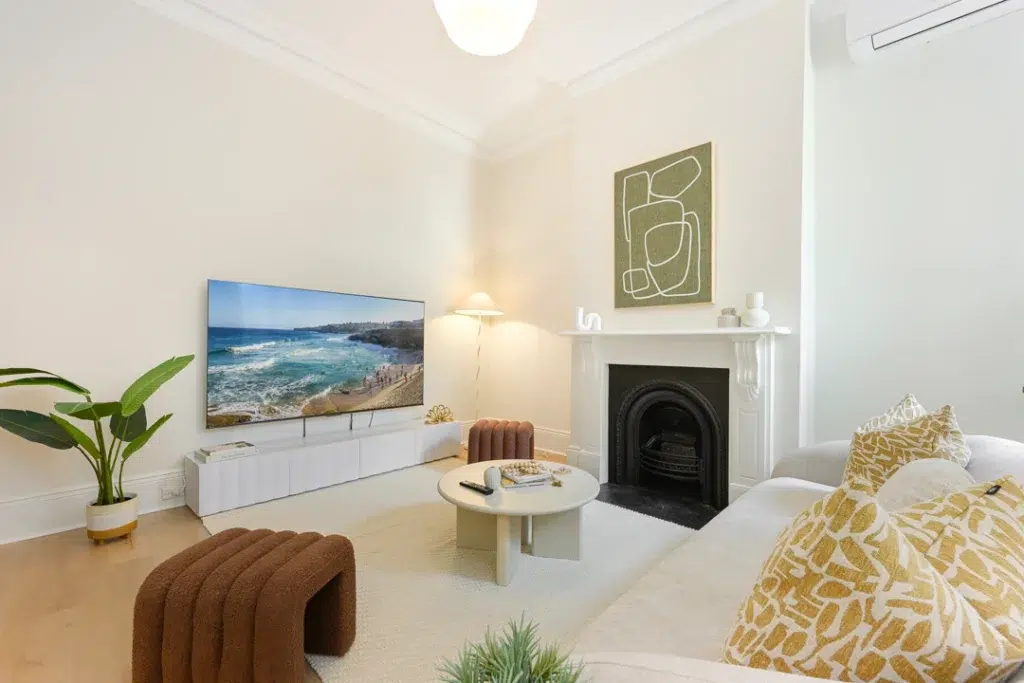
Material Choices for the Australian Climate
Australia’s climate puts specific demands on furniture materials that are easy to overlook when shopping online. Homes in Queensland and coastal New South Wales experience high humidity for months at a time, which can cause solid timber to expand, contract, or warp if the species and finish are poorly chosen. European oak is a reliable choice here: it is a dense, stable hardwood that tolerates humidity variation better than softer timbers, and its tight grain resists moisture absorption.
Ceramic and sintered stone table surfaces are particularly well-suited to Australian households for a different reason: they are genuinely heat-resistant, scratch-resistant, and require only a wipe with a dry microfibre cloth after meals. In a household where the dining table also serves as a homework station, a craft table, or a breakfast bar, a surface that does not need coasters or placemats to survive daily life is a practical choice, not a luxury.
For upholstered pieces in small rooms, linen and performance fabrics in natural or neutral tones are the most forgiving — they read as light and airy in compact spaces and hold their colour in homes with significant natural light, which Australian properties typically receive in abundance.
Room-by-Room: Space-Saving Principles That Actually Work
Beyond individual product choices, a few consistent principles determine whether a small home feels considered or cramped.
Go vertical. Wall-height shelving or tall storage units draw the eye upward and exploit space that low furniture leaves completely unused. In a small bedroom or study nook, a tall narrow bookcase occupies roughly the same floor area as a bedside table but stores ten times as much.
Choose raised legs over floor-skimming bases. Furniture that sits directly on the floor visually shrinks a room. A sofa, sideboard, or bed frame on slender legs shows the floor beneath, creating the impression of more space than actually exists. This is one of the most effective and lowest-cost visual tricks in small-space design.
Limit the number of pieces, not their usefulness. The goal of multifunctional furniture is not to own less — it is to achieve the same utility with fewer, smarter pieces. A sideboard that replaces a TV unit, a storage cabinet, and a hallway table is not a compromise. It is a more efficient allocation of the same budget and floor space.
Match the scale of furniture to the room. A dining table that seats eight in a room that seats four at maximum capacity does not become useful on the rare occasions guests visit — it just occupies space the rest of the time. Match your furniture’s everyday size to your everyday life, and choose pieces that expand when needed rather than pieces that are permanently large.
Ready to Rethink Your Space?
The multifunctional furniture revolution is not about shrinking your lifestyle to fit your home. It is about choosing pieces intelligent enough to adapt to your life as it actually unfolds — quiet weeknights, weekend gatherings, working from home, and everything in between. Whether you are furnishing a new apartment in Brisbane, refreshing a compact Melbourne terrace, or rethinking an open-plan Sydney home, the right pieces make every square metre count.
Browse Ele Living’s full collection of extendable dining tables, sideboards and buffets, and entertainment units to find the pieces that work as hard as you do.
Frequently Asked Questions
What is the best multifunctional furniture for a small Australian apartment?
The three highest-impact pieces for a small Australian apartment are an extendable dining table (which handles both everyday meals and entertaining without a fixed large footprint), a sideboard or buffet (which consolidates dining, living, and hallway storage into one piece), and an entertainment unit with built-in drawers and shelves (which replaces multiple smaller storage items). Together, these three pieces can furnish an open-plan apartment comprehensively without overcrowding it.
How do I choose a dining table size for a small open-plan home?
Measure your available floor area first, then apply two rules: allow approximately 60 cm of table width per seated person, and leave at least 90 cm between the table edge and any wall or other furniture so chairs can be pulled out freely. For most compact Australian apartments, an extendable table that seats 4 in its closed position and expands to seat 6–8 is the most practical choice, as it adapts to both everyday use and entertaining without permanently occupying a large footprint.
Can a sideboard be used as a TV unit in a small living room?
Yes. A sideboard positioned in the living room functions effectively as a TV console, providing a surface at the correct viewing height while its internal drawers and cabinets store media devices, cables, and accessories. This dual use eliminates the need for a separate TV unit, freeing up floor space. Choose a sideboard with a top surface deep enough to safely support your television’s base — most sideboards range from 40 to 50 cm deep, which is sufficient for most screen sizes up to 75 inches.
What furniture materials handle Australian humidity and sunlight best?
European oak is a dense, stable hardwood that resists humidity-driven expansion and contraction better than softer timbers, making it a strong choice for Queensland and coastal NSW homes. Ceramic and sintered stone table surfaces are heat-resistant and scratch-resistant, requiring only a dry wipe for maintenance. For upholstered pieces, performance linen and tightly woven natural fabrics in light or neutral tones resist UV fading in Australia’s high-light-intensity interiors and create a sense of openness in compact rooms.